Tại bài viết này, IELTS CITY sẽ cùng các bạn giải đề thi IELTS Reading – The Slow Food Organization kèm đáp án và phân tích chi tiết sau đây nhé!
Bài đọc
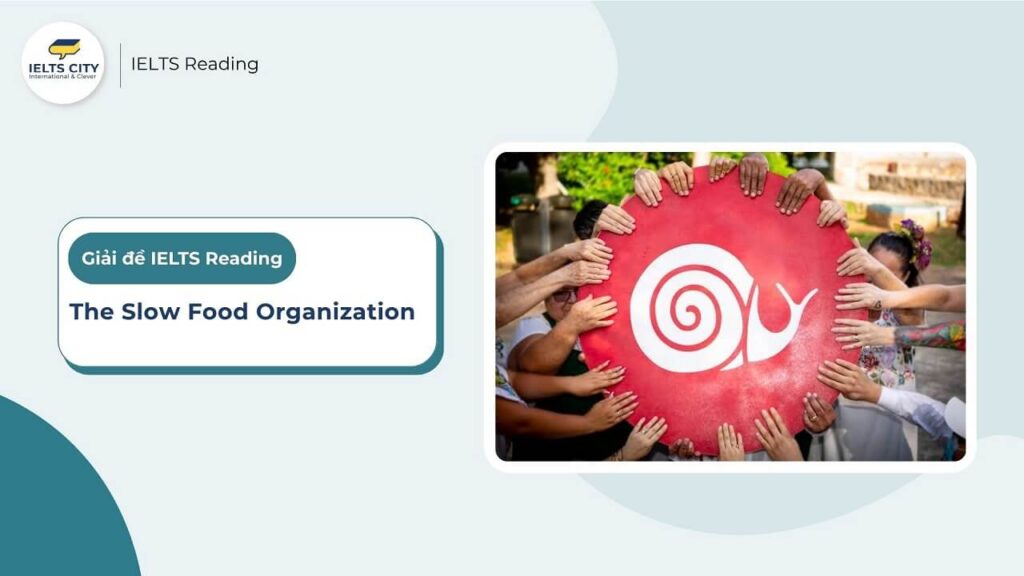
The Slow Food Organization
Taking time with food
Slow Food began when Carlo Petrini, an Italian journalist, was dismayed by the opening of a fast food restaurant on the famous Piazza di Spagna in Rome. He decided it was time to celebrate the fast-disappearing virtues of the slow production, preparation, and eating of food. What he had in mind when he began the Slow Food organization were local foods that were prepared in their traditional manner and eaten at leisurely meals with family and friends.
Slow Food is the antithesis of everything fast food stands for, and it is now a thriving international organization with members in 45 countries, a successful publishing operation, and a biannual trade show. In addition, Slow Food has launched a project called the “Ark of Taste” and a concept called “virtuous globalization.”
The Ark of Taste is the catalog of endangered food plant and animal species that Slow Food has resolved to protect against the rising global tide of fast food. Some examples of the biodiversity promoted by the Ark of Taste include Iroquois white corn and the Narragansett turkey, both of which are old, or heritage, foods in North America.
Biodiversity is a term commonly associated with discussions of threats to wild species, but according to Slow Food, the biodiversity of the domesticated species people have depended on for centuries is no less important. For example, when the latest patented hybrid variety of plant proves unable to withstand fungal or bacterial disease, plant breeders will need the disease-resistant genes that can be obtained from heritage plant varieties. If Iroquois white corn had fallen out of production, as it very nearly did two decades ago due to the commercial launch of a new hybrid corn, irreplaceable and possibly crucial sets of corn genes would have been lost forever.
For some time, plant-saver groups have been preserving heritage plant varieties, but Slow Food takes that project a step further. The movement understands that all the food and plant species in its Ark of Taste carry not only information about genetic traits but also embody a set of social practices and, in some cases, even a way of life of previous generations.
Slow Food teaches that when a variety of food or breed of animal disappears, something greater also disappears: a specific, irreplaceable mode of life that a particular people have devised for living in a particular part of the Earth. An example of this is the Iroquois white corn. By working to find new markets for this ancient variety of corn, Slow Food is ensuring a source of income for the Native Americans who grow, roast, and grind this corn and, at the same time, helping to preserve the specific cookery and religious uses that the corn has been selected to support over hundreds of years.
Slow Food has moved away from the traditional locations for preserving rare animal and plant species. For example, instead of zoos for rare animals and botanic gardens for rare plants, Slow Food maintains that its plants and animals are best preserved on the dishes and plates of discerning customers.
To this end, Slow Food has introduced the concept of virtuous globalization, which recognizes that the best way to ensure a safe future for distinctive local products and practices is to find a global market for them. In this way, local producers will be able to continue producing the food which for many years has been a defining factor of their cultural identity.
The characteristics of virtuous globalization of Slow Foods show how different the concept is from the globalization of fast foods. Whereas global fast food companies aim to sell food that has an unchanging taste wherever in the world it is eaten, the taste of a recognized Slow Food is unique to that food.
Another aspect is the quantities sold of these two types of food. In the case of fast food, these are enormous, but the quantities of Slow Food products that are available for selling are limited, due to the rarity of the plants or animals.
The customers of virtuous globalization Slow Foods are affluent people who value novelty and are undeterred by the costs, which are high when compared to fast food.
Some years ago, a network of farmers in the USA volunteered to take part in a national Slow Food project. The project was for the farmers to raise a total of 5,000 turkeys from eggs that had been selected from four varieties of endangered turkey. The farmers had to begin by hatching the eggs they had been supplied with, then raising the young turkeys to adults. They were promised a guaranteed price per pound for the adult turkeys.
The object of the enterprise was to raise heritage turkeys for the North American holiday of Thanksgiving. Although chefs in some restaurants where the turkeys were on the menu complained that the Slow Food turkeys were smaller than industrially produced turkeys, the distinctive flavors were very well received by consumers.
By the following year, the world population of these turkeys had nearly doubled. It may seem strange that taking pleasure in eating could be a strategy for preserving biodiversity because pleasure is not normally associated with environmentalism. However, pleasure is part of what Slow Food aims to bring back, by demonstrating that, at least when it comes to the politics of food, the best choice is often the one that provides the most enjoyment.
Kiến thức cần nắm:
Câu hỏi
Questions 1 – 6
Do the following statements agree with the information given in Reading Passage 1?
In boxes 1-6 on your answer sheet, write:
- TRUE if the statement agrees with the information.
- FALSE if the statement contradicts the information.
- NOT GIVEN if there is no information on this.
- The Ark of Taste lists food plant and animal species in danger of extinction.
- Slow Food considers the term biodiversity should be restricted to wild species.
- The genes of heritage plants may be of vital importance to modern plant breeders.
- Countries can sell the genes of their heritage plant varieties internationally.
- Slow Food maintains that food and culture exist independently of each other.
- Some Native Americans are now giving cookery classes featuring Iroquois white corn.
Questions 7 – 9
Complete the table below.
Choose ONE WORD ONLY from the passage for each answer.
Write your answers in boxes 7-9 on your answer sheet.
| Taste | Quantities sold | Cost | |
|---|---|---|---|
| Slow foods | 7. _______ | 8. ________ | High |
| Fast foods | 9. _______ | enromous | Low |
Questions 10 – 13
Answer the questions below.
Choose ONE WORD AND/OR A NUMBER from the passage for each answer.
Write your answers in boxes 10-13 on your answer sheet.
- What were farmers in the USA given so that they could raise endangered turkeys?
- How many varieties of endangered turkey benefited from the project?
- Who was not happy with the size of the turkeys?
- Who liked the taste of the endangered turkeys?
Đáp án kèm phân tích
Questions 1 – 6: TRUE / FALSE / NOT GIVEN
- 1. Đáp án: TRUE
- Giải thích: Danh sách Ark of Taste liệt kê các loài động/thực vật thực phẩm có nguy cơ tuyệt chủng (endangered = in danger of extinction).
- Vị trí thông tin: Đoạn 3: “The Ark of Taste is the catalog of endangered food plant and animal species that Slow Food has resolved to protect…”
- 2. Đáp án: FALSE
- Giải thích: Tổ chức Slow Food cho rằng sự đa dạng sinh học của các loài gia súc/cây trồng (domesticated species) cũng quan trọng không kém các loài hoang dã (wild species), chứ không nên chỉ giới hạn (restricted) ở các loài hoang dã.
- Vị trí thông tin: Đoạn 4: “Biodiversity is a term commonly associated with discussions of threats to wild species, but according to Slow Food, the biodiversity of the domesticated species… is no less important.”
- 3. Đáp án: TRUE
- Giải thích: Bài đọc chỉ ra rằng khi các giống lai hiện đại bị nấm/bệnh tấn công, các nhà lai tạo cây trồng sẽ rất cần đến các gen kháng bệnh từ những giống cây di sản (heritage plant varieties).
- Vị trí thông tin: Đoạn 4: “For example, when the latest patented hybrid variety of plant proves unable to withstand fungal or bacterial disease, plant breeders will need the disease-resistant genes that can be obtained from heritage plant varieties.”
- 4. Đáp án: NOT GIVEN
- Giải thích: Bài đọc chỉ đề cập đến việc bảo tồn gen của các giống cây di sản, hoàn toàn không đề cập đến việc các quốc gia có thể bán gen của các giống cây này ra quốc tế hay không.
- Vị trí thông tin: Đoạn 4.
- 5. Đáp án: FALSE
- Giải thích: Tuyên bố nói thực phẩm và văn hóa tồn tại độc lập với nhau là sai. Bài đọc khẳng định thực phẩm mang theo các tập quán xã hội và lối sống của văn hóa địa phương.
- Vị trí thông tin: Đoạn 5 & 8: “…food and plant species in its Ark of Taste carry not only information about genetic traits but also embody a set of social practices…” và “…defining factor of their cultural identity.”
- 6. Đáp án: NOT GIVEN
- Giải thích: Bài đọc có nói việc bảo tồn ngô trắng Iroquois giúp duy trì cách nấu ăn truyền thống của người Mỹ bản địa (Native Americans), nhưng không đề cập việc họ đang mở các lớp dạy nấu ăn (giving cookery classes).
- Vị trí thông tin: Đoạn 6.
Questions 7 – 9: Table Completion
- 7. Đáp án: unique
- Giải thích: Vị của thực phẩm Slow Food mang tính độc nhất cho từng loại thực phẩm đó.
- Vị trí thông tin: Đoạn 9: “…the taste of a recognized Slow Food is unique to that food.”
- 8. Đáp án: limited
- Giải thích: Số lượng sản phẩm Slow Food được bán ra bị giới hạn do sự quý hiếm của động/thực vật.
- Vị trí thông tin: Đoạn 10: “…the quantities of Slow Food products that are available for selling are limited, due to the rarity of the plants or animals.”
- 9. Đáp án: unchanging
- Giải thích: Món ăn nhanh (fast food) được bán ra nhằm mục đích có vị không thay đổi (unchanging) bất kể được ăn ở đâu trên thế giới.
- Vị trí thông tin: Đoạn 9: “Whereas global fast food companies aim to sell food that has an unchanging taste wherever in the world it is eaten…”
Questions 10 – 13: Short Answer Questions
- 10. Đáp án: eggs
- Giải thích: Nông dân Hoa Kỳ được cung cấp trứng (eggs) của 4 loài gà tây có nguy cơ tuyệt chủng để họ ấp và nuôi lớn.
- Vị trí thông tin: Đoạn 12: “The project was for the farmers to raise a total of 5,000 turkeys from eggs that had been selected… The farmers had to begin by hatching the eggs they had been supplied with…”
- 11. Đáp án: 4(hoặc four)
- Giải thích: Dự án đã chọn ra trứng từ 4 giống gà tây có nguy cơ tuyệt chủng.
- Vị trí thông tin: Đoạn 12: “…selected from four varieties of endangered turkey.”
- 12. Đáp án: chefs
- Giải thích: Các đầu bếp (chefs) ở một số nhà hàng đã phàn nàn rằng kích thước của gà tây Slow Food nhỏ hơn so với gà tây sản xuất công nghiệp.
- Vị trí thông tin: Đoạn 13: “Although chefs in some restaurants where the turkeys were on the menu complained that the Slow Food turkeys were smaller…”
- 13. Đáp án: consumers
- Giải thích: Hương vị đặc trưng của gà tây đã nhận được sự đón nhận rất tốt từ người tiêu dùng (consumers).
- Vị trí thông tin: Đoạn 13: “…the distinctive flavors were very well received by consumers.”
Cảm ơn các bạn đã theo dõi hết đáp án đề thi IELTS Reading – The Slow Food Organization kèm phân tích chi tiết của IELTS CITY. Chúc các bạn luyện thi IELTS Reading hiệu quả và sớm đạt Target nhé.
Cập nhật đề thi thật sớm nhất tại: