Bài đọc
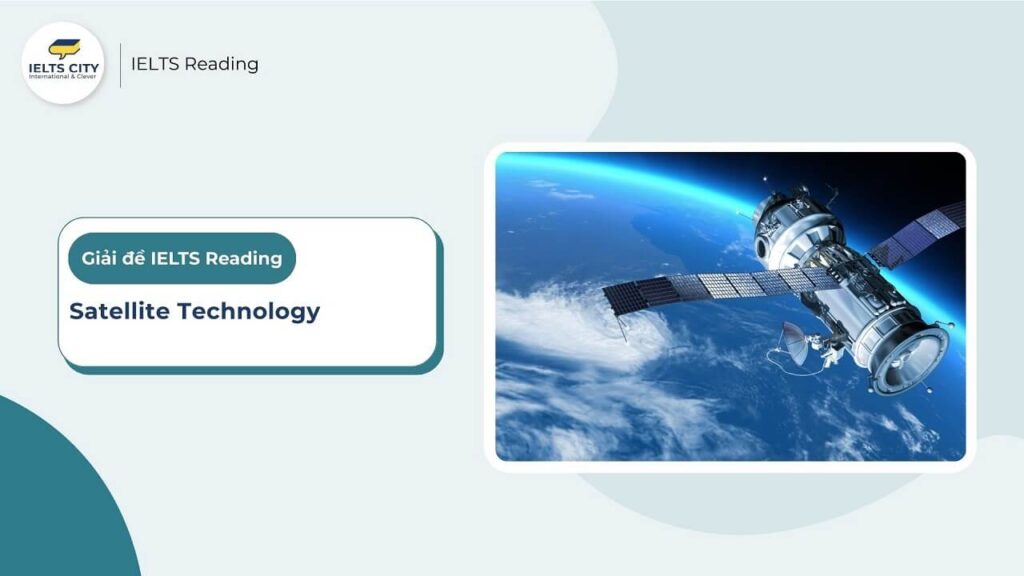
Satellite Technology
The space-age began with the launch of the Russian artificial satellite Sputnik in 1957 and developed further with the race to the moon between the United States and Russia. This rivalry was characterized by advanced technology and huge budgets. In this process, there were spectacular successes, some failures, but also many spin-offs.
Europe, Japan, China, and India quickly joined this space club of the superpowers. With the advent of relatively low-cost high-performance mini-satellites and launchers, the acquisition of indigenous space capabilities by smaller nations in Asia has become possible. How, in what manner, and for what purpose will these capabilities be realized?
A. Rocket technology has progressed considerably since the days of ‘fire arrows’ (bamboo poles filled with gunpowder) first used in China around 500 BC, and, during the Sung Dynasty, to repel Mongol invaders at the battle of Kaifeng (Kai-fung fu) in AD 1232. These ancient rockets stand in stark contrast to the present-day Chinese rocket launch vehicles, called the ‘Long March’, intended to place a Chinese astronaut in space by 2005 and, perhaps, to achieve a Chinese moon-landing by the end of the decade.
B. In the last decade, there has been a dramatic growth in space activities in Asia both in the utilization of space-based services and the production of satellites and launchers. This rapid expansion has led many commentators and analysts to predict that Asia will become a world space power. The space-age has had dramatic effects worldwide with direct developments in space technology influencing telecommunications, meteorological forecasting, earth resource and environmental monitoring, and disaster mitigation (flood, forest fires, and oil spills). Asian nations have been particularly eager to embrace these developments.
C. New and innovative uses for satellites are constantly being explored with potential revolutionary effects, such as in the field of health and telemedicine, distance education, crime prevention (piracy on the high seas), food and agricultural planning and production (rice crop monitoring). Space in Asia is very much influenced by the competitive commercial space sector, the emergence of low-cost mini-satellites, and the globalization of industrial and financial markets. It is not evident how Asian space will develop in the coming decades in the face of these trends. It is, however, important to understand and assess the factors and forces that shape Asian space activities and development in determining its possible consequences for the region.
D. At present, three Asian nations, Japan, China, and India, have comprehensive end-to-end space capabilities and possess a complete space infrastructure: space technology, satellite manufacturing, rockets, and spaceports. Already self-sufficient in terms of satellite design and manufacturing, South Korea is currently attempting to join their ranks with its plans to develop a launch site and spaceport. Additionally, nations in Southeast Asia as well as those bordering the Indian subcontinent (Nepal, Pakistan, and Bangladesh), have, or are starting to develop indigenous space programmes. The Association of Southeast Asian Nations (ASEAN) has, in varying degrees, embraced space applications using foreign technology and over the past five years or so its space activities have been expanding. Southeast Asia is predicted to become the largest and fastest-growing market for commercial space products and applications, driven by telecommunications (mobile and fixed services), the Internet, and remote sensing applications. In the development of this technology, many non-technical factors, such as economics, politics, culture, and history, interact and play important roles, which in turn affect Asian technology.
E. Asia and Southeast Asia, in particular, suffers from a long list of recurrent large-scale environmental problems including storms and flooding, forest fires and deforestation, and crop failures. Thus the space application that has attracted the most attention in this region is remote sensing. Remote sensing satellites equipped with instruments to take photographs of the ground at different wavelengths provide essential information for natural resource accounting, environmental management, disaster prevention and monitoring, land-use mapping, and sustainable development planning. Progress in these applications has been rapid and impressive. ASEAN members, unlike Japan, China, and India, do not have their own remote sensing satellites, however, most of its member nations have facilities to receive, process, and interpret such data from American and European satellites. In particular, Thailand, Malaysia, and Singapore have world-class remote sensing processing facilities and research programmes. ASEAN has plans to develop (and launch) its own satellites and in particular remote sensing satellites. Japan is regarded as the dominant space power in Asia and its record of successes and quality of technologies are equal to those of the West. In view of the technological challenges and high risks involved in space activities, a very long, and expensive, the learning curve has been followed to obtain those successes achieved. Japan’s satellite manufacturing was based on the old and traditional defense and military procurement methodologies as practiced in the US and Europe.
F. In recent years there have been fundamental changes in the way satellites are designed and built to drastically reduce costs. The emergence of ‘small satellites’ and their quick adoption by Asian countries as a way to develop low-cost satellite technology and rapidly establish a space capability has given these countries the possibility to shorten their learning curve by a decade or more. The global increase of technology transfer mechanisms and use of readily available commercial technology to replace costly space and military-standard components may very well result in a highly competitive Asian satellite manufacturing industry.
G. The laws of physics are the same in Tokyo as in Toulouse, and the principles of electronics and mechanics know no political or cultural boundaries. However, no such immutability applies to engineer practices and management; they are very much influenced by education, culture, and history. These factors, in turn, have an effect on costs, lead times, product designs and, eventually, international sales. Many Asian nations are sending their engineers to be trained in the West. Highly experienced, they return to work in the growing Asian space industry. Will this acquisition of technical expertise, coupled perhaps with the world-renowned Japanese manufacturing and management techniques, be applied to build world-class satellites and reduce costs?
Kiến thức cần nắm:
Câu hỏi
Questions 1-5
The reading passage has seven paragraphs, A-G. Choose the correct heading for paragraphs A-G from the list below. Write the correct number, i-ix, in boxes 1-5 on your answer sheet.
- i. Western countries provide essential assistance
- ii. Unbalanced development for an essential space technology
- iii. Innovative application compelled by competition
- iv. An ancient invention which is related to the future
- v. Military purpose of the satellite
- vi. Rockets for application in ancient China
- vii. Space development in Asia in the past
- viii. Non-technology factors counts
- ix. competitive edge gained by more economically feasible satellite
Paragraph D Example: Current space technology development in Asia
1. Paragraph A………………..
2. Paragraph B………………..
3. Paragraph C………………..
4. Paragraph E………………..
5. Paragraph F………………..
Questions 6-9
Match the following reasons for each question according to the information given in the passage. Write the correct letter A-F, in boxes 6-9 on your answer sheet.
A. Because it helps administrate the crops.
B. Because there are some unapproachable areas.
C. Because the economic level in that area is low.
D. Because there are influences from some other social factors.
E. Because it can be used in non-peaceful purpose.
F. Because disasters such as bush fires happened in Southeast Asia.
6. Why is remote-photographic technology used to resolve environmental problems?………………..
7. Why is satellite technology used in the medicine area?………………..
8. Why Asian countries’ satellite technology is limited for development?………………..
9. Why is satellite technology deployed in an agricultural area?………………..
Questions 10-13
Do the following statements agree with the information given in the Reading Passage? In boxes 10-13 on your answer sheet, write:
TRUE if the statement is true
FALSE if the statement is false
NOT GIVEN if the information is not given in the passage
10. Ancient China had already deployed rockets as a military purpose as early as 500 years ago.
11. Space technology has enhanced the literacy of Asia.
12. Photos taken by satellites with certain technology help predict some natural catastrophes prevention and surveillance.
13. Commercial competition constitutes a boosting factor to Asian technology.
Đáp án kèm phân tích
Questions 1-5: Matching Headings
1. Paragraph A: iv (An ancient invention which is related to the future)
- Giải thích: Đoạn A mở đầu bằng việc nhắc đến “fire arrows” (tên lửa cổ xưa) được dùng ở Trung Quốc khoảng năm 500 trước Công nguyên và đối lập nó (“stand in stark contrast”) với tên lửa hiện đại “Long March” dùng để đưa phi hành gia vào vũ trụ hoặc lên mặt trăng trong tương lai. Như vậy, đoạn văn kết nối một phát minh cổ đại với các kế hoạch tương lai.
- Vị trí và trích dẫn: Đoạn A.”…days of ‘fire arrows’… around 500 BC… stand in stark contrast to the present-day Chinese rocket launch vehicles… intended to place a Chinese astronaut in space by 2005…”
2. Paragraph B: vii (Space development in Asia in the past)
- Giải thích: Đoạn B nói về sự phát triển mạnh mẽ của các hoạt động vũ trụ ở Châu Á “trong thập kỷ qua” (In the last decade). Nó mô tả sự mở rộng nhanh chóng này đã dẫn đến các dự đoán về vị thế của Châu Á.
- Vị trí và trích dẫn: Đoạn B.”In the last decade, there has been a dramatic growth in space activities in Asia…”
3. Paragraph C: iii (Innovative application compelled by competition)
- Giải thích: Đoạn C liệt kê các ứng dụng mới và sáng tạo (“New and innovative uses”) như y tế từ xa, giáo dục từ xa… đồng thời nói rằng vũ trụ ở Châu Á chịu ảnh hưởng lớn bởi khu vực thương mại cạnh tranh (“competitive commercial space sector”).
- Vị trí và trích dẫn: Đoạn C.”New and innovative uses for satellites are constantly being explored… Space in Asia is very much influenced by the competitive commercial space sector…”
4. Paragraph E: ii (Unbalanced development for an essential space technology)
- Giải thích: Đoạn E tập trung vào công nghệ “remote sensing” (viễn thám) – một công nghệ thiết yếu để giải quyết các vấn đề môi trường. Tuy nhiên, sự phát triển không cân bằng (“unbalanced”): Nhật, Trung, Ấn có vệ tinh riêng, trong khi các nước ASEAN (ngoại trừ việc nhận dữ liệu) thì chưa có vệ tinh viễn thám riêng.
- Vị trí và trích dẫn: Đoạn E.”ASEAN members, unlike Japan, China, and India, do not have their own remote sensing satellites…”
5. Paragraph F: ix (competitive edge gained by more economically feasible satellite)
- Giải thích: Đoạn F nói về sự xuất hiện của “small satellites” (vệ tinh nhỏ) và việc sử dụng công nghệ thương mại có sẵn để thay thế các linh kiện đắt tiền, giúp giảm chi phí (“drastically reduce costs”) và tạo ra ngành công nghiệp cạnh tranh cao (“highly competitive”). Điều này đồng nghĩa với “economically feasible” (khả thi về kinh tế).
- Vị trí và trích dẫn: Đoạn F.”…drastically reduce costs… replace costly space and military-standard components may very well result in a highly competitive Asian satellite manufacturing industry.”
Questions 6-9: Matching Information
6. Why is remote-photographic technology used to resolve environmental problems? -> F (Because disasters such as bush fires happened in Southeast Asia.)
- Giải thích: “Remote-photographic technology” chính là “remote sensing” (viễn thám – chụp ảnh từ xa). Đoạn E nói khu vực này chịu nhiều vấn đề môi trường như bão, lụt, cháy rừng (“forest fires” = “bush fires”).
- Vị trí và trích dẫn: Đoạn E.”…suffers from a long list of recurrent large-scale environmental problems including… forest fires…”
7. Why is satellite technology used in the medicine area? -> B (Because there are some unapproachable areas.)
- Giải thích: Đoạn C đề cập đến “health and telemedicine” (y tế và y tế từ xa) cùng với “distance education” (giáo dục từ xa). Mặc dù bài không nói thẳng là “unapproachable areas” (khu vực khó tiếp cận), nhưng bản chất của “telemedicine” (y tế từ xa) là dùng cho những nơi mà bác sĩ khó đến trực tiếp hoặc bệnh nhân ở xa. Đây là suy luận logic nhất trong các lựa chọn.
- Vị trí và trích dẫn: Đoạn C.”…such as in the field of health and telemedicine, distance education…”
8. Why Asian countries’ satellite technology is limited for development? -> D (Because there are influences from some other social factors.)
- Giải thích: Đoạn D nói rằng trong quá trình phát triển công nghệ, các yếu tố phi kỹ thuật (“non-technical factors”) như kinh tế, chính trị, văn hóa, lịch sử đóng vai trò quan trọng và ảnh hưởng đến công nghệ Châu Á. Đây chính là “social factors”.
- Vị trí và trích dẫn: Đoạn D, câu cuối.”…many non-technical factors, such as economics, politics, culture, and history, interact and play important roles, which in turn affect Asian technology.”
9. Why is satellite technology deployed in an agricultural area? -> A (Because it helps administrate the crops.)
- Giải thích: Đoạn C liệt kê ứng dụng trong “agricultural planning and production (rice crop monitoring)”. Việc giám sát và lên kế hoạch sản xuất lúa gạo chính là quản lý/điều hành mùa màng (“administrate the crops”).
- Vị trí và trích dẫn: Đoạn C.”…food and agricultural planning and production (rice crop monitoring).”
Questions 10-13: TRUE / FALSE / NOT GIVEN
10. Ancient China had already deployed rockets as a military purpose as early as 500 years ago.
- Đáp án: FALSE
- Giải thích: Bài đọc nói Trung Quốc dùng “fire arrows” khoảng năm 500 BC (500 trước Công nguyên – tức là cách đây khoảng 2500 năm) và dùng để chống quân Mông Cổ năm 1232 AD (cách đây khoảng 800 năm). Câu hỏi nói là “500 years ago” (cách đây 500 năm, tức khoảng năm 1500 AD) là sai về mốc thời gian.
- Vị trí và trích dẫn: Đoạn A.”…first used in China around 500 BC, and… to repel Mongol invaders at the battle of Kaifeng (Kai-fung fu) in AD 1232.”
11. Space technology has enhanced the literacy of Asia.
- Đáp án: NOT GIVEN
- Giải thích: Bài đọc ở đoạn C có nhắc đến “distance education” (giáo dục từ xa) như một ứng dụng tiềm năng. Tuy nhiên, bài không hề khẳng định rằng công nghệ này đã thực sự “enhanced the literacy” (nâng cao tỷ lệ biết chữ) của Châu Á.
12. Photos taken by satellites with certain technology help predict some natural catastrophes prevention and surveillance.
- Đáp án: TRUE
- Giải thích: Đoạn E nói vệ tinh viễn thám chụp ảnh mặt đất (“take photographs of the ground”) cung cấp thông tin thiết yếu cho việc phòng chống và giám sát thảm họa (“disaster prevention and monitoring”).
- Vị trí và trích dẫn: Đoạn E.”Remote sensing satellites equipped with instruments to take photographs of the ground… provide essential information for… disaster prevention and monitoring…”
13. Commercial competition constitutes a boosting factor to Asian technology.
- Đáp án: TRUE
- Giải thích: Đoạn C nói không gian ở Châu Á bị ảnh hưởng bởi khu vực thương mại cạnh tranh. Đoạn F nói thêm rằng việc chuyển giao công nghệ và sử dụng công nghệ thương mại có sẵn giúp rút ngắn quá trình học hỏi (“shorten their learning curve”) và tạo ra ngành công nghiệp cạnh tranh. Điều này cho thấy cạnh tranh thương mại là yếu tố thúc đẩy.
- Vị trí và trích dẫn: Đoạn C và F.”Space in Asia is very much influenced by the competitive commercial space sector…” (Đoạn C) & “…result in a highly competitive Asian satellite manufacturing industry.” (Đoạn F).
Chúc các bạn luyện thi IELTS Reading hiệu quả
Cập nhật đề thi thật mới nhất tại: