Bài đọc
Marketing and the Information Age
For the early practitioners of marketing in the late 19th and early 20th centuries, the business of selling was simply a matter of continually finding new customers. By contrast, marketing managers in the current era recognise the importance of gathering information about the market and about potential customers. They recognise that if companies are to be profitable, customers must gain and retain their perceptions of value from the brands they buy over a long time frame, rather than from a single transaction. This also means that customers must see value in returning continually to the stores where they shop, as well as to the service providers they deal with.
Marketing practitioners and marketing scientists have never worked more closely than they currently do. There are many reasons for this, including the fact that this is the information age where convergence in telecommunications, media and technology is causing old ways to be challenged, and new methods and tools to be tested. Customer expectations have risen as new technologies allow new approaches. For instance, the subscriber-TV music channel Channel [V] encourages its viewers to sign up for text messages and email alerts that tell them when their favourite artists and songs are about to be broadcast. Competitive advantage lies in being able to recognise which customers can be given greater attention, not just because they demand it but because it makes commercial sense to provide high levels of product quality and service.
Modern marketing information systems rely on information technology to enable marketing intelligence to be gathered and to store and analyse marketing research information. While some of the information used is gathered by government bodies such as the Australian Bureau of Statistics and Statistics New Zealand, most of it is purposefully gathered by marketing organisations for client companies. In the process, computer technology is used to manipulate the data and then to present the information in such a way that executives can readily identify any problems or issues, and quickly arrive at solutions.
In order to produce superior value and satisfaction for customers, marketing managers need information at almost every turn. They need information about customers—end-users and resellers— as well as competitors and governmental and other forces in the marketplace. One marketing executive put it this way: “To manage a business well is to manage its future, and to manage the future is to manage information.” Increasingly, marketers are viewing information not just as an input for making better decisions but also as an important strategic asset and marketing tool. As household incomes increase, choice widens and buyers become better discriminating, so sellers need information about how buyers respond to different products and advertising campaigns.
The supply of information has also increased greatly. It has been suggested by the futurist and best-selling author John Naisbitt that the United States and, by observation, developed countries such as Australia, New Zealand, and Singapore are moving from industrial to information-based economies. These post-industrial economies earn 70-80% of their Gross Domestic Product from services, and have entered what some commentators have termed the “Information Age” or the “Information Technology Era”.
One study found that with all the information now available through supermarket scanners, a packaged goods product controller is bombarded with one million to one billion new numbers each week. As Naisbitt points out: “Running out of information is not a problem, but drowning in it is.” Yet marketers frequently complain that they lack information of the right kind but have plenty of the wrong kind, or they claim that marketing information is so widely spread throughout the organisation that it takes great effort to locate even simple facts. In addition, subordinates may withhold information they believe will reflect badly on their performance, and important information often arrives too late to be useful, or on-time information is not accurate. So marketing managers need better information. Although marketing organisations have greater capacity to provide managers with information, they often do not use it well. As a result, many marketing organisations are now studying their managers’ information needs and designing information systems specifically to meet those needs.
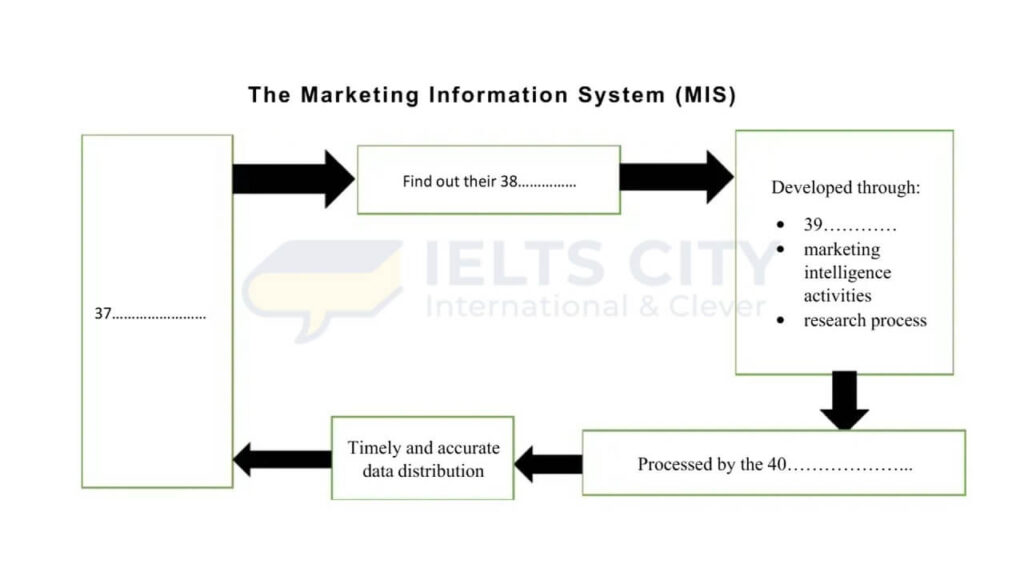
One solution is to use a Marketing Information System (MIS). This consists of people, equipment, and procedures which, when put together, are able to gather, analyse, evaluate and distribute needed, timely, and accurate information to marketing decision-makers. The MIS begins and ends with marketing managers. First, it interacts with these managers to assess the information needs they have. Next, it develops the needed information from internal records, marketing intelligence activities, and the research process. The analysis unit processes the data to make it more useful and, finally, the MIS distributes it to managers in the right form and at the right time to help them make better marketing decisions.
However, the costs of obtaining, processing, storing, and delivering information can mount quickly. In some cases, additional information will do little to change or improve a manager’s decision, or the costs of the information will exceed the returns from the improved decision. For example, if an organisation estimates that launching a new product without any further information will yield a profit of $500,000, then it would be foolish to spend $30,000 for additional information that would increase the profit to only $525,000. By itself, information is valueless—its value comes from its use.
Kiến thức cần nắm:
Câu hỏi
Questions 27 – 31
Which paragraph contains the following information?
Write the correct letter, A-H, in boxes 27-31 on your answer sheet.
- The fact that there may be too much information to cope with
- The relevance of generating repeat business
- An example of personalised marketing
- An illustration of a situation where commissioning new might not be advisable
- How the greater wealth of customers enables them to select from a broader range of products
Questions 32 – 36
Do the following statements agree with the claims of the writer in Reading Passage?
In boxes 32-36 on your answer sheet, write:
YES if the statement agrees with the claims of the writer
NO if the statement contradicts the claims of the writer
NOT GIVEN if it is impossible to say what the writer thinks about this
- The majority of marketing statistics are gathered by government agencies.
- The move from an industrial to an information-based economy has happened more quickly in New Zealand than in Australia.
- Employees sometimes hide information that gives a poor impression of them.
- Managers frequently fail to make good use of the information they receive.
- Marketing information has to be used to be valuable.
Questions 37 – 40
Complete the Bow-chart below
Choose NO MORE THAN TWO WORDS from the passage for each answer.
White your answers in boxes 37-40 on your answer sheet.
Đáp án
Questions 27 – 31: Matching Information
27. The fact that there may be too much information to cope with
- Đáp án: F
- Giải thích: Đoạn văn đề cập đến việc người quản lý bị “oanh tạc” bởi hàng triệu con số mỗi tuần và trích dẫn câu nói “chết đuối trong thông tin”.
- Vị trí: Đoạn F: “a packaged goods product controller is bombarded with one million to one billion new numbers each week… ‘Running out of information is not a problem, but drowning in it is.'”.
28. The relevance of generating repeat business
- Đáp án: A
- Giải thích: Tác giả nhấn mạnh tầm quan trọng của việc giữ chân khách hàng lâu dài thay vì chỉ một giao dịch đơn lẻ.
- Vị trí: Đoạn A: “…customers must gain and retain their perceptions of value… over a long time frame, rather than from a single transaction. This also means that customers must see value in returning continually…”.
29. An example of personalised marketing
- Đáp án: B
- Giải thích: Ví dụ về kênh nhạc Channel [V] gửi tin nhắn/email thông báo về nghệ sĩ và bài hát yêu thích của từng cá nhân.
- Vị trí: Đoạn B: “For instance, the subscriber-TV music channel Channel [V] encourages its viewers to sign up for text messages and email alerts that tell them when their favourite artists and songs are about to be broadcast.”.
30. An illustration of a situation where commissioning new might not be advisable
- Đáp án: H
- Giải thích: Đoạn này đưa ra ví dụ về việc chi tiền cho thông tin bổ sung nhưng lợi nhuận mang lại không tương xứng với chi phí.
- Vị trí: Đoạn H: “…it would be foolish to spend $30,000 for additional information that would increase the profit to only $525,000.”.
31. How the greater wealth of customers enables them to select from a broader range of products
- Đáp án: D
- Giải thích: Khi thu nhập hộ gia đình tăng, sự lựa chọn của khách hàng cũng rộng mở hơn.
- Vị trí: Đoạn D: “As household incomes increase, choice widens and buyers become better discriminating…”.
Questions 32 – 36: YES / NO / NOT GIVEN
32. The majority of marketing statistics are gathered by government agencies.
- Đáp án: NO
- Giải thích: Bài đọc nói rằng mặc dù có thông tin từ chính phủ, nhưng hầu hết (most of it) là do các tổ chức marketing tự thu thập.
- Vị trí: Đoạn C: “While some of the information… is gathered by government bodies… most of it is purposefully gathered by marketing organisations…”.
33. The move from an industrial to an information-based economy has happened more quickly in New Zealand than in Australia.
- Đáp án: NOT GIVEN
- Giải thích: Bài đọc có nhắc cả Úc và New Zealand đang chuyển dịch cơ cấu kinh tế, nhưng không so sánh tốc độ giữa hai quốc gia.
- Vị trí: Đoạn E.
34. Employees sometimes hide information that gives a poor impression of them.
- Đáp án: YES
- Giải thích: Cấp dưới có thể giấu nhẹm thông tin mà họ tin là sẽ ảnh hưởng xấu đến đánh giá năng lực của mình.
- Vị trí: Đoạn F: “…subordinates may withhold information they believe will reflect badly on their performance…”.
35. Managers frequently fail to make good use of the information they receive.
- Đáp án: YES
- Giải thích: Dù có năng lực cung cấp thông tin lớn, các tổ chức thường không sử dụng chúng hiệu quả.
- Vị trí: Đoạn F: “Although marketing organisations have greater capacity to provide managers with information, they often do not use it well.”.
36. Marketing information has to be used to be valuable.
- Đáp án: YES
- Giải thích: Bản thân thông tin không có giá trị, giá trị của nó chỉ đến từ việc sử dụng.
- Vị trí: Đoạn H: “By itself, information is valueless—its value comes from its use.”.
Questions 37 – 40: Flow-chart Completion
37. marketing managers
- Giải thích: Sơ đồ bắt đầu và kết thúc với box này. Văn bản xác nhận hệ thống MIS bắt đầu và kết thúc với các nhà quản lý.
- Vị trí: Đoạn G: “The MIS begins and ends with marketing managers.”.
38. information needs
- Giải thích: Bước đầu tiên là tương tác với quản lý để đánh giá nhu cầu của họ.
- Vị trí: Đoạn G: “First, it interacts with these managers to assess the information needs they have.”.
39. internal records
- Giải thích: Thông tin được phát triển từ 3 nguồn: hồ sơ nội bộ, hoạt động tình báo và nghiên cứu.
- Vị trí: Đoạn G: “Next, it develops the needed information from internal records, marketing intelligence activities, and the research process.”.
40. analysis unit
- Giải thích: Bộ phận phân tích xử lý dữ liệu để làm nó trở nên hữu ích.
- Vị trí: Đoạn G: “The analysis unit processes the data to make it more useful…”.
Cảm ơn các bạn đã theo dõi hết đáp án đề IELTS Reading – Marketing and the Information Age kèm phân tích chi tiết của IELTS CITY. Chúc các bạn luyện thi IELTS Reading hiệu quả và sớm đạt Aim nhé!
Cập nhật đề thi thật sớm nhất tại: