Bài đọc
Mapping the Mind
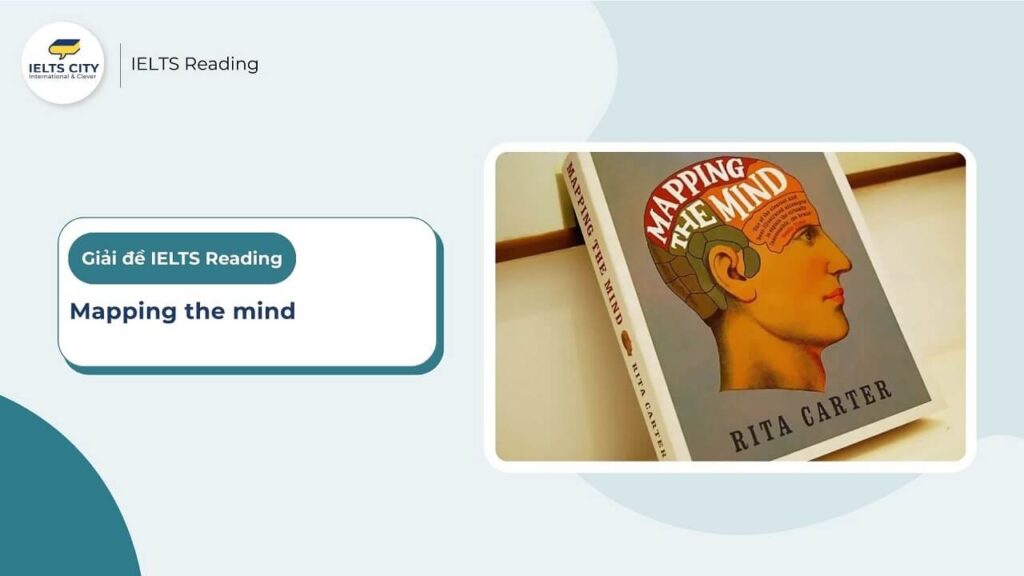
Dr. Simon Hanson reviews Rita Carter’s book Mapping the Mind.
The often-used phrase “I believe it when I see it” betrays a very intimate fact of human nature. We are visual creatures and rely on sight to serve as a judge of what is real and what is not. When discussing the intricacies of the human mind, for most of society’s existence, things have not been visible; we have, for the most part, relied on intangible concepts, metaphors, and words to explore our inner psyche. I have no idea what my ego looks like. I must have one because it can be hurt or appeased by how others treat me. But how do I know it really exists?
Recent progress in brain research and neuroimaging is changing all of this. With our modern technology of functional imaging, we can now look at the brain as it is working and attribute activation in certain areas of the brain to behaviors, thoughts, and feelings. In essence, our new tools are prompting new thoughts on who we are and how we are organized. Rita Carter’s book, Mapping the Mind, explores these issues and exploits science’s ability to look into our heads as a tool to examine who we are.
In its most basic form, Carter’s book serves as a very accessible introduction to the subject of neuroanatomy, a subject most of us would not appreciate fully without investing in a semester of medical school. Mapping the Mind uses beautifully rendered three-dimensional computer images of the brain to explain anatomical structures and pathways. The presentation style acknowledges our natural bias towards perceiving and learning information visually. Presenting the concept of a brain area devoted to maintaining attention by calling it the “anterior cingulate cortex” would probably put most readers to sleep while their brains struggled to use that area to focus on what the name meant. Showing the reader a three-dimensionally-oriented area that easily translates to a place we can point to on our skulls grounds the anatomical vocabulary in something we can all understand—our own heads.
In spite of the title, however, the book is not an exact map or a reference guide. Its chapters cover concepts such as perception, emotions, memory, and higher consciousness, and are best read rather than referenced. The book, beautifully accented with brain-oriented artwork of both pure aesthetic and illustrative value, walks a pleasing line between college textbook and coffee table art book, describing the subtle nuances of vision, language, thought, and feeling with science and art.
While the art requires no explanations, Carter uses her background as a journalist to keep the reader engaged in the science. Factual support in the form of documented cases is liberally employed to show the abstract concepts in recognizable behaviors and consequences we can all relate to. For example, in describing brain circuitry involved in controlling anger, Carter uses familiar situations, like suppressing anger when we feel we have been insulted, to illustrate the neuroscience involved. She follows with a discussion of children’s emotional maturity, pointing out that in children, the areas involved in inhibition of anger are not as well developed as in adults, providing an explanation for the tantrums of a six-year-old. Carter presents the science in an engaging yet factual manner, allowing people to draw their own conclusions and connect the dots between scientific discovery and what it means in our daily lives.
By presenting neuroscience in this manner, Mapping the Mind seems to aim itself at an audience that is often forgotten: the general reader who wants to know more about a specific area of scientific study. From a scientific perspective, danger often lurks when writing for a general audience as scientific credibility can be sacrificed in order to keep readers engaged. Carter circumvents this problem by including the participation of research scientists in the writing. The book is littered with short directed essays written by specialists in specific areas of brain research.
One of my favorite features of the book is the optical illusions. As a teacher, I am always searching for ways to make information relevant to the reader. Mapping the Mind does this by peppering appropriate chapters with optical illusions that illustrate how the brain processes information. These delicious enigmas do not stand alone as supplementary information or unrelated facts but are accompanied by textual explanations and insights into what causes the perceptual incongruities. I found many of these explanations so good at conveying basic brain principles that I borrowed some of them for use in lectures.
From our unique place in history, we can, at present, use our overly developed neo-cortex in combination with the tools of science to examine our own minds at work. Our journey is to try and figure out who we are. Rather than providing us with an academic textbook, Mapping the Mind serves as a sort of kiosk map saying “you are here” with a big red dot. Mapping the Mind shows us where we are by giving us a snapshot of how we work. There are many books out there that explain the mind. The unique perspective of this book is that it uses the brain itself to guide the journey.
Kiến thức cần nắm:
Câu hỏi
Questions 27–32
Do the following statements agree with the claims of the writer in Reading Passage 3?
In boxes 27–32 on your answer sheet, write:
- YES if the statement agrees with the claims of the writer
- NO if the statement contradicts the claims of the writer
- NOT GIVEN if it is impossible to say what the writer thinks about this
27. Our sense of what is real is independent of what we can see.
28. The ego must exist because its reaction can be felt.
29. The illustrations in Mapping the Mind are in vibrant colours.
30. People prefer to learn facts that are presented visually.
31. Mapping the Mind is primarily a decorative book.
32. Mapping the Mind leaves the readers to interpret the facts.
Questions 33–37
Choose the correct letter, A, B, C, or D.
Write the correct letter in boxes 33–37 on your answer sheet.
33. According to the writer, Carter’s background in journalism means that:
A. she has easy access to relevant sources.
B. she cannot explain complex medical ideas.
C. her writing style maintains the reader’s interest.
D. her presentation of information is more suited to newspapers.
34. When discussing how the brain works in controlling anger, Carter:
A. gives guidance to parents of young children.
B. uses examples readers can relate to.
C. admires the control shown by adults.
D. criticizes the behaviour of children.
35. The writer feels that the way neuroscience is presented in Mapping the Mind:
A. will not give readers any new information.
B. could make readers doubt scientific claims.
C. will encourage more people to study neuroscience.
D. will appeal to readers with no knowledge of the topic.
36. The writer especially likes the optical illusions in Mapping the Mind because they:
A. help people relate to the topic.
B. are a long-standing scientific mystery.
C. can teach us about the function of the eye.
D. show something people have never seen before.
37. The writer says that Mapping the Mind operates as a “kiosk map” because:
A. it reveals our current position in terms of our knowledge of the brain.
B. the reader can become lost in other textbooks about the brain.
C. it describes specific areas of the brain such as the neo-cortex.
D. its illustrations are particularly clear and accurate.
Questions 38–40
Complete each sentence with the correct ending, A–G, below.
Write the correct letter in boxes 38–40 on your answer sheet.
- 38. A book that uses terms such as “anterior cingulate cortex”…
- 39. The use of three-dimensional illustrations in the book…
- 40. The inclusion of essays by research scientists in Mapping the Mind…
A. makes a background in science essential for comprehension.
B. adds academic integrity to a popular approach.
C. is not helpful for checking particular data about the brain.
D. bores and confuses people.
E. generates more interest in the field of study and promotes research.
F. solves the difficulty of people’s negative reactions to technical language.
G. has no clear purpose.
Đáp án kèm phân tích
Questions 27–32: YES / NO / NOT GIVEN
27. Our sense of what is real is independent of what we can see.
- Đáp án: NO
- Giải thích: Câu hỏi nói cảm nhận của chúng ta về thực tại độc lập (không phụ thuộc) vào những gì ta thấy. Bài đọc lại khẳng định: “We are visual creatures and rely on sight to serve as a judge of what is real and what is not” (Chúng ta là sinh vật trực quan và dựa vào thị giác để đánh giá cái gì là thật). Như vậy, chúng ta phụ thuộc vào thị giác chứ không phải độc lập.
- Vị trí: Đoạn 1, câu 2.
28. The ego must exist because its reaction can be felt.
- Đáp án: YES
- Giải thích: Tác giả viết: “I have no idea what my ego looks like. I must have one because it can be hurt or appeased by how others treat me.” (Tôi không biết cái tôi trông như thế nào. Tôi chắc chắn phải có một cái vì nó có thể bị tổn thương hoặc được xoa dịu…). Việc bị tổn thương hay xoa dịu chính là phản ứng/cảm giác (reaction can be felt).
- Vị trí: Đoạn 1, hai câu cuối.
29. The illustrations in Mapping the Mind are in vibrant colours.
- Đáp án: NOT GIVEN
- Giải thích: Bài đọc có khen ngợi các hình ảnh minh họa là “beautifully rendered three-dimensional computer images” (hình ảnh máy tính 3D được dựng đẹp mắt) và “beautifully accented” (được làm nổi bật đẹp mắt), nhưng hoàn toàn không đề cập đến việc chúng có màu sắc rực rỡ (vibrant colours) hay không.
30. People prefer to learn facts that are presented visually.
- Đáp án: YES
- Giải thích: Bài đọc nói phong cách trình bày của cuốn sách thừa nhận “our natural bias towards perceiving and learning information visually” (thiên kiến tự nhiên của chúng ta đối với việc nhận thức và học thông tin bằng hình ảnh). “Natural bias” (thiên hướng tự nhiên) tương đương với “prefer” (thích hơn).
- Vị trí: Đoạn 3, câu 3.
31. Mapping the Mind is primarily a decorative book.
- Đáp án: NO
- Giải thích: Bài đọc nói cuốn sách “walks a pleasing line between college textbook and coffee table art book” (đi trên ranh giới hài hòa giữa sách giáo khoa đại học và sách ảnh trang trí), và nó mô tả các sắc thái của thị giác, ngôn ngữ… bằng khoa học. Nó là một “accessible introduction” (lời giới thiệu dễ tiếp cận) về giải phẫu thần kinh. Do đó, nói nó chủ yếu là sách trang trí (decorative) là sai.
- Vị trí: Đoạn 4, câu 3.
32. Mapping the Mind leaves the readers to interpret the facts.
- Đáp án: YES
- Giải thích: Đoạn văn nói Carter trình bày khoa học một cách lôi cuốn nhưng thực tế, “allowing people to draw their own conclusions” (cho phép mọi người tự rút ra kết luận của riêng họ). Điều này đồng nghĩa với việc để độc giả tự diễn giải các sự kiện.
- Vị trí: Đoạn 5, câu cuối.
Questions 33–37: Multiple Choice
33. According to the writer, Carter’s background in journalism means that:
- Đáp án: C (her writing style maintains the reader’s interest.)
- Giải thích: Bài đọc nói Carter sử dụng nền tảng nhà báo của mình để “keep the reader engaged in the science” (giữ cho độc giả gắn kết/hứng thú với khoa học). Điều này đồng nghĩa với “maintains the reader’s interest”.
- Vị trí: Đoạn 5, câu 1.
34. When discussing how the brain works in controlling anger, Carter:
- Đáp án: B (uses examples readers can relate to.)
- Giải thích: Carter sử dụng “familiar situations, like suppressing anger…” (các tình huống quen thuộc, như kìm nén sự tức giận) và giải thích cơn giận của trẻ em để minh họa. Đây là những ví dụ mà người đọc có thể liên hệ được.
- Vị trí: Đoạn 5, câu 3.
35. The writer feels that the way neuroscience is presented in Mapping the Mind:
- Đáp án: D (will appeal to readers with no knowledge of the topic.)
- Giải thích: Tác giả nói cuốn sách nhắm đến đối tượng thường bị lãng quên: “the general reader who wants to know more about a specific area” (độc giả phổ thông muốn biết thêm…). Độc giả phổ thông là những người chưa có kiến thức chuyên sâu về chủ đề này.
- Vị trí: Đoạn 6, câu 1.
36. The writer especially likes the optical illusions in Mapping the Mind because they:
- Đáp án: A (help people relate to the topic.)
- Giải thích: Tác giả là giáo viên luôn tìm cách để “make information relevant to the reader” (làm cho thông tin trở nên liên quan/gần gũi với người đọc). Ông thích ảo ảnh thị giác vì cuốn sách dùng chúng để làm điều này.
- Vị trí: Đoạn 7, câu 2.
37. The writer says that Mapping the Mind operates as a “kiosk map” because:
- Đáp án: A (it reveals our current position in terms of our knowledge of the brain.)
- Giải thích: Kiosk map có dấu chấm đỏ nói “you are here” (bạn đang ở đây). Tác giả ví von cuốn sách như vậy vì nó “shows us where we are by giving us a snapshot of how we work” (cho chúng ta biết chúng ta đang ở đâu bằng cách đưa ra một cái nhìn tổng quan về cách chúng ta hoạt động) trong hành trình tìm hiểu bản thân.
- Vị trí: Đoạn 8, câu 3-4.
Questions 38–40: Sentence Completion
38. A book that uses terms such as “anterior cingulate cortex”… -> D (bores and confuses people.)
- Giải thích: Đoạn 3 nói việc dùng thuật ngữ như “anterior cingulate cortex” sẽ “put most readers to sleep while their brains struggled…” (làm hầu hết độc giả buồn ngủ trong khi não họ phải vật lộn…). Điều này tương đương với việc gây nhàm chán (bores) và bối rối (confuses).
- Vị trí: Đoạn 3.
39. The use of three-dimensional illustrations in the book… -> F (solves the difficulty of people’s negative reactions to technical language.)
- Giải thích: Ngay sau khi nói về sự khó khăn của thuật ngữ chuyên ngành (câu 38), bài đọc nói: “Showing the reader a three-dimensionally-oriented area… grounds the anatomical vocabulary in something we can all understand” (Cho độc giả xem khu vực 3D… đặt từ vựng giải phẫu vào thứ mà tất cả chúng ta có thể hiểu). Hình ảnh giúp giải quyết khó khăn của ngôn ngữ kỹ thuật.
- Vị trí: Đoạn 3.
40. The inclusion of essays by research scientists in Mapping the Mind… -> B (adds academic integrity to a popular approach.)
- Giải thích: Đoạn 6 nói viết cho đại chúng (“popular approach”) có nguy cơ mất “scientific credibility” (uy tín khoa học). Carter giải quyết vấn đề này bằng cách đưa vào các bài luận của các nhà khoa học nghiên cứu (“essays by research scientists”). Điều này giúp thêm sự chính trực/uy tín học thuật (“academic integrity”) cho cuốn sách.
- Vị trí: Đoạn 6.
Chúc các bạn luyện thi IELTS Reading hiệu quả và sớm đạt Target nhé!
Cập nhật đề thi thật sớm nhất tại: