Bài đọc
Let’s all be friends
New research shows how the people we are in social contact with can influence us for better – and worse. Governments should take heed.
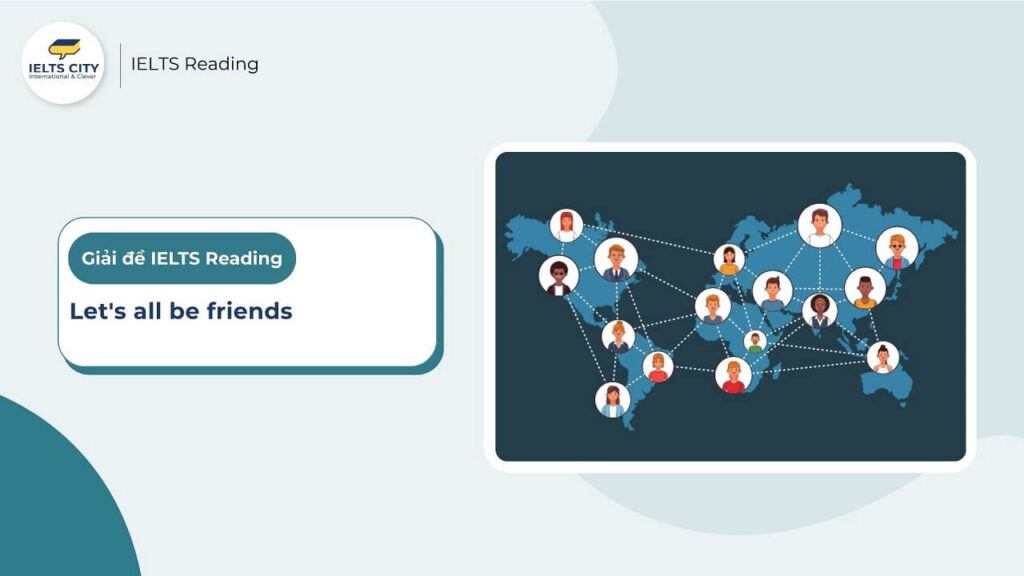
From healthcare to climate change, governments today face a range of problems in which they must persuade people to change their behaviour. But maybe instead of relying on their powers of persuasion, governments should consider using the science of social networks as a tool to do this. True, many claims for the power of these are based on the hype surrounding major social networking websites. But the basic idea is simple: people can join together in groups with particular patterns of social links, and these patterns then have important effects on the way they behave.
The shape of these networks has surprising effects. Take an unlikely example: stage musicals. Brian Uzzi is a sociologist at Northwestern University in Chicago. He is also a big fan of musicals. Musicals have been big business for decades, but investors have to guess which shows will be a hit. Bye Bye Birdie, a profitable 1960 production, ran for 607 nights. Bring Back Birdie, its 1981 sequel, closed after just four. Intrigued, Uzzi used network science to find out why.
He investigated 321 American musicals that were launched between 1945 and 1989, paying particular attention to whether the team of director, producers, choreographers and writers had worked together before. After crunching the statistics, he discovered something remarkable. Teams who had never worked together, perhaps unsurprisingly, fared poorly: their ‘weak’ networks meant a lack of creative vision, and lots of failures. And at the other extreme, teams that had worked together successfully also tended to produce flops. Sometimes, lacking outside creative input, the team just rehashed the same ideas that worked the last time; sometimes, lacking newcomers, they ‘developed’ their vision in unwise ways. Either way, lightning rarely struck twice. But, in between, Uzzi found a point of balance. Groups with exactly the right mix of new and old participants reliably produced hits. This variation in the ‘density’ of the ties allowed easy communication and fostered greater creativity; new ideas from the outsiders meshed with the experience of the insiders. It made no difference whether a musical was about cats or roller-skating, or who starred in it – what mattered was the nature of the network binding its team together.
These insights have some fascinating consequences for policymaking-particularly in the area of health. According to network science, teenagers are more likely to adopt unhealthy eating habits if their friends’ friends consume junk food, even if they don’t personally know those individuals. Conversely, they may be encouraged to eat more healthily if their immediate friends do. This opens up opportunities for governments to reduce spending. For example, suppose a health authority has £100 and wants to improve the diets of ten people. If it invests £10 in each individual separately, it might only influence one or two. However, by investing the entire sum in persuading one or two key individuals who are central to a social network, the authority could trigger a cascade effect, influencing the entire group for a fraction of the cost. The same principle could be applied to other areas, such as encouraging physical exercise or quitting smoking.
However, the influence of networks is not always positive. The same mechanisms that can spread healthy behaviours can also amplify harmful ones. Financial panic, political extremism, and the rapid proliferation of unhealthy fads can all be accelerated by tightly-knit social networks. This presents a significant challenge for policymakers: how to harness the power of social connectivity for good while mitigating its potential for harm. Understanding the precise structure of these networks—identifying the key influencers and the strength of the connections between people—is therefore critical. Without this map of human relationships, any intervention risks being inefficient or could even produce unintended negative consequences.
Kiến thức cần nắm:
Câu hỏi
Questions 27-31
Complete the summary below.
Choose NO MORE THAN TWO WORDS from the passage for each answer.
Brian Uzzi’s research into Broadway musicals revealed that the success of a production was not determined by its subject matter or cast, but by the 27………………………. of its creative team. He found that groups composed entirely of newcomers were often unsuccessful due to a lack of 28………………………. . Conversely, teams that had a history of working together also frequently produced 29………………………. because they tended to reuse old ideas. The most successful teams had a 30………………………. of experienced and new members. This balance in network 31………………………. promoted effective communication and creativity.
Questions 32-36
Do the following statements agree with the claims of the writer in Reading Passage 3?
Write:
YES if the statement agrees with the claims of the writer
NO if the statement contradicts the claims of the writer
NOT GIVEN if it is impossible to say what the writer thinks about this
32. Governments are currently very effective at using social network science.
33. Bring Back Birdie was financially successful.
34. Uzzi’s study analysed musicals from the first half of the 20th century.
35. The eating habits of a teenager can be affected by someone they have never met.
36. Investing money in central figures is guaranteed to be more cost-effective.
Questions 37-40
Complete the notes below.
Choose ONE WORD ONLY from the passage for each answer.
The Implications of Network Science
Positive use for governments:
- Can be used to improve public health initiatives, e.g., diet and 37………………………. .
- Targeting key people in a network can create a 38………………………. effect, influencing many others.
Risks and challenges:
- Networks can also spread 39………………………. behaviours, like financial panic or extreme views.
- To use networks effectively, policymakers must understand their 40………………………. .
Đáp án kèm phân tích
Questions 27-31: Complete the summary (NO MORE THAN TWO WORDS)
27. nature
- Giải thích: Bài đọc nói rằng sự thành công không phụ thuộc vào chủ đề hay ngôi sao, mà điều quan trọng là “bản chất của mạng lưới” (nature of the network) gắn kết nhóm lại với nhau. Câu hỏi tóm tắt là “được quyết định bởi [27] của đội ngũ sáng tạo”. Từ “nature” là từ chính xác nhất thể hiện đặc điểm này.
- Vị trí và trích dẫn: Đoạn 3, câu cuối.”…what mattered was the nature of the network binding its team together.”
28. creative vision
- Giải thích: Bài đọc giải thích rằng các nhóm chưa bao giờ làm việc cùng nhau (newcomers) thường thất bại vì mạng lưới yếu của họ dẫn đến sự thiếu hụt “tầm nhìn sáng tạo”.
- Vị trí và trích dẫn: Đoạn 3, giữa đoạn.”…their ‘weak’ networks meant a lack of creative vision, and lots of failures.”
29. flops
- Giải thích: Ngược lại, các nhóm đã làm việc cùng nhau quá nhiều cũng thường tạo ra các “thất bại” (flops).
- Vị trí và trích dẫn: Đoạn 3, giữa đoạn.”…teams that had worked together successfully also tended to produce flops.”
30. mix
- Giải thích: Các nhóm thành công nhất có sự “pha trộn” (mix) chính xác giữa người cũ và người mới.
- Vị trí và trích dẫn: Đoạn 3, gần cuối.”Groups with exactly the right mix of new and old participants reliably produced hits.”
31. density
- Giải thích: Sự cân bằng này trong “mật độ” (density) của các mối quan hệ đã thúc đẩy giao tiếp hiệu quả và sự sáng tạo.
- Vị trí và trích dẫn: Đoạn 3, gần cuối.”This variation in the ‘density’ of the ties allowed easy communication and fostered greater creativity…”
Questions 32-36: YES / NO / NOT GIVEN
32. NO
- Câu hỏi: Governments are currently very effective at using social network science. (Chính phủ hiện đang sử dụng rất hiệu quả khoa học mạng lưới xã hội.)
- Giải thích: Đoạn 1 nói rằng thay vì dựa vào thuyết phục, chính phủ nên cân nhắc (should consider) sử dụng khoa học mạng lưới. Điều này ngụ ý rằng họ chưa thực sự sử dụng nó hoặc chưa sử dụng hiệu quả.
- Trích dẫn: Đoạn 1: “But maybe… governments should consider using the science of social networks as a tool to do this.”
33. NO
- Câu hỏi: Bring Back Birdie was financially successful. (Bring Back Birdie đã thành công về mặt tài chính.)
- Giải thích: Đoạn 2 nói rằng vở này phải đóng cửa chỉ sau 4 đêm (“closed after just four”), trái ngược với vở trước đó là “profitable”. Đóng cửa sau 4 đêm nghĩa là thất bại thảm hại.
- Trích dẫn: Đoạn 2: “Bring Back Birdie… closed after just four.”
34. NO
- Câu hỏi: Uzzi’s study analysed musicals from the first half of the 20th century. (Nghiên cứu của Uzzi phân tích các vở nhạc kịch từ nửa đầu thế kỷ 20.)
- Giải thích: Nghiên cứu bao gồm các vở từ năm 1945 đến 1989. Giai đoạn này chủ yếu thuộc về nửa sau của thế kỷ 20.
- Trích dẫn: Đoạn 3: “…investigated 321 American musicals that were launched between 1945 and 1989…”
35. YES
- Câu hỏi: The eating habits of a teenager can be affected by someone they have never met. (Thói quen ăn uống của một thiếu niên có thể bị ảnh hưởng bởi người mà họ chưa từng gặp.)
- Giải thích: Bài đọc nói thanh thiếu niên dễ ăn uống không lành mạnh nếu bạn của bạn họ (friends’ friends) ăn đồ ăn vặt, ngay cả khi họ không quen biết cá nhân những người đó.
- Trích dẫn: Đoạn 4: “…even if they don’t personally know those individuals.”
36. NO
- Câu hỏi: Investing money in central figures is guaranteed to be more cost-effective. (Đầu tư tiền vào các nhân vật trung tâm được đảm bảo là hiệu quả về chi phí hơn.)
- Giải thích: Bài đọc chỉ nói rằng cơ quan y tế có thể (could) tạo ra hiệu ứng lan truyền, chứ không khẳng định là “được đảm bảo” (guaranteed). Trong bài thi IELTS, sự khác biệt giữa “could” và “guaranteed” thường dẫn đến đáp án NO.
- Trích dẫn: Đoạn 4: “…the authority could trigger a cascade effect…”
Questions 37-40: Complete the notes (ONE WORD ONLY)
37. exercise
- Giải thích: Câu hỏi trong phần tóm tắt là: “Can be used to improve public health initiatives, e.g., diet and…” (Có thể được dùng để cải thiện các sáng kiến sức khỏe cộng đồng, ví dụ: chế độ ăn uống và…).
- Vị trí: Đoạn 4, câu cuối cùng.
“The same principle could be applied to other areas, such as encouraging physical exercise or quitting smoking.”
38. cascade
- Giải thích: Nhắm mục tiêu vào những người chủ chốt có thể tạo ra một hiệu ứng “thác đổ/lan truyền” (cascade effect).
- Vị trí và trích dẫn: Đoạn 4, gần cuối.”…the authority could trigger a cascade effect…”
39. harmful
- Giải thích: Mạng lưới cũng có thể lan truyền các hành vi “có hại” (harmful), ví dụ như hoảng loạn tài chính.
- Vị trí và trích dẫn: Đoạn 5, câu 2.”The same mechanisms… can also amplify harmful ones.”
40. structure
- Giải thích: Để sử dụng mạng lưới hiệu quả, các nhà hoạch định chính sách phải hiểu “cấu trúc” (structure) của chúng.
- Vị trí và trích dẫn: Đoạn 5, gần cuối.”Understanding the precise structure of these networks… is therefore critical.”
Cập nhật đề thi thật mới nhất: